THE DETAILS VOLTAGE & AMP RATINGS
Explore selling surplus electrical equipment marked 600-volt in Michigan, with clear identification and offer planning.
What the marking tells you
A Michigan owner can inquire about 600-volt electrical distribution equipment whether it is still in place or already in storage. The rating provides one useful clue, but it is only part of the description. The buyer reviews the actual equipment, available information and collection requirements before deciding whether to make an offer.
A 600-volt marking describes voltage information, not the complete capability or condition of an assembly. The manufacturer’s full label and the way the rating is stated are important context. Do not infer current rating, interrupting rating, configuration or suitability for another installation from the voltage number alone.
Details beyond one rating
An existing nameplate or asset record may show additional voltage, current and other markings. Keep the information attached to the particular assembly or device it describes; a neighboring component may carry different ratings. A missing label can be noted as unknown, and no seller measurements or testing are required.
The most useful inventory is one that describes the property being offered, not every item on a project. Available manufacturer markings, quantities and a broad location can help. When one figure refers to a component rather than the complete assembly, preserve that distinction and leave uncertain fields blank.
The proposed sale
A mixed lot may contain assets with different voltage and current markings. If the information is already available, identify each item or group separately rather than applying one rating to the whole lot. The buyer reviews the equipment as described, including gaps and any loose components.
A mixed inventory does not need to be sorted physically before it can be discussed. An existing list or a general description can distinguish assemblies from loose parts and identify items that are not for sale. The buyer handles the agreed collection instead of asking the owner to stage the inventory.
Condition and offer review
A description of condition should distinguish known facts from assumptions. For example, a stored spare may be unused, but its packaging and storage history can still matter. The buyer can review unknowns as part of the inquiry; no operating test or seller-conducted troubleshooting is required.
A complete description helps the buyer assess the scope, but it does not guarantee an offer or a particular price. Quantity, components, access, timing and uncertainty can all matter. The seller can consider any cash offer without an obligation to accept it merely because an inquiry was submitted.
Qualified work and safety
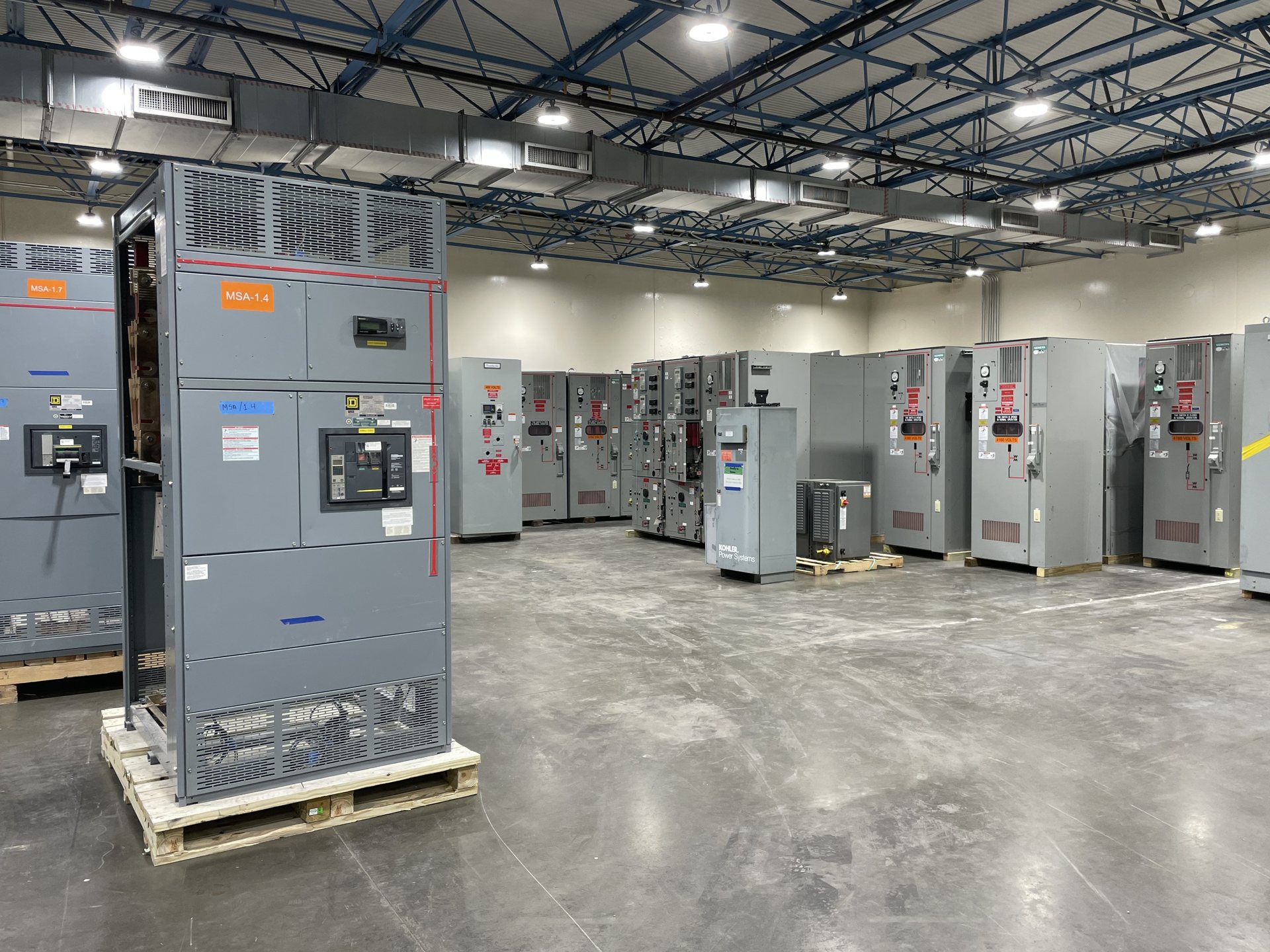
We buy electrical equipment across all voltage classes, including switchgear from decommissioned data centers and shut-down power plants. For an agreed purchase, we handle necessary disconnects, removal, crane and rigging work, loading, hauling and freight with qualified personnel. The seller does no testing or physical work and does not arrange or pay for freight.
The seller is not asked to prove the equipment works or prepare it for removal. Do not open an enclosure, touch electrical parts or enter an unsafe area to identify it. The buyer uses qualified personnel to coordinate and perform the necessary electrical work and physical removal.
Access and freight
A freight plan considers more than a destination. The buyer may need to coordinate access to the equipment, lifting and a route out of the site. Existing dimensions or site rules are helpful when available. The buyer handles the on-site physical work, loading, hauling and covered freight.
If equipment ownership or access is controlled by more than one party, identify the authorized contact for the proposed sale. The buyer can then discuss the practical handover and coordinate its personnel. Identifying a contact is not a requirement for the seller to disconnect, load or transport the equipment.
Request an offer
The buyer first reviews what is offered and the associated site details. A cash offer may follow, subject to that review and agreement on the transaction; the seller can decide whether to accept. For an agreed purchase, the seller is paid upfront, and the buyer covers freight.
To start, describe the assets you want considered and provide an authorized contact. Existing identification, condition notes and timing are useful when available, but uncertain details can be labeled unknown. The buyer reviews the opportunity, pays upfront for an agreed purchase and takes care of the physical work.