THE DETAILS BRANDS
Learn what to share when selling ABB electrical distribution equipment in Michigan and how an offer and freight may be arranged.
Start with the actual equipment
An owner with ABB electrical distribution equipment in Michigan can request a buyer-only review of the assets actually available for sale. The manufacturer name is a starting point for identification, not a substitute for the equipment type, condition or contents of the lot. Complete records are helpful when they already exist, but they are not required to begin.
The name ABB may be useful for identifying an item, but equipment type and individual markings still matter. A lot can contain one assembly, loose devices or equipment from several manufacturers. The name is used here only to identify equipment; it does not imply affiliation with or endorsement by the manufacturer.
Manufacturer and asset records
An existing inventory or exterior label may show a product line, model or rating. Keep those details with the item they identify instead of assigning them to the entire lot. If the lineup includes loose devices or components with different markings, describe each group separately where the information is already available.
If an inventory or photograph already exists, it can help the buyer distinguish the proposed assets from equipment that is staying. The manufacturer, model, visible markings and approximate number of sections may be useful. A seller can also say that a detail is unknown; the buyer reviews the information available.
The sale situation
A mixed-brand inventory is clearer when each equipment group is identified separately. Existing photos or a list can distinguish a complete assembly from loose devices and show which pieces carry a particular name. Do not assume neighboring components share a manufacturer, model, rating or ownership simply because they are stored together.
It is reasonable to start the conversation before every detail of a project is finalized. Share the intended scope and any timing that is already known, while identifying plans that may change. The buyer reviews those details before making an offer and agrees the collection arrangements with the authorized seller.
Reviewing condition and value
Unknown history is not the same as a claim that equipment has failed. Equally, a clean exterior or a complete-looking lineup is not proof that it works. A seller can describe the facts available, note missing components and let the buyer review the equipment without seller-conducted tests.
The buyer considers the equipment itself and the practical work needed to collect it. Quantity, identifying information, completeness, condition, access and timing can all affect the review. An inquiry does not guarantee an offer for every item or a particular amount, and the seller can decide whether to accept a proposed purchase.
Buyer-handled work
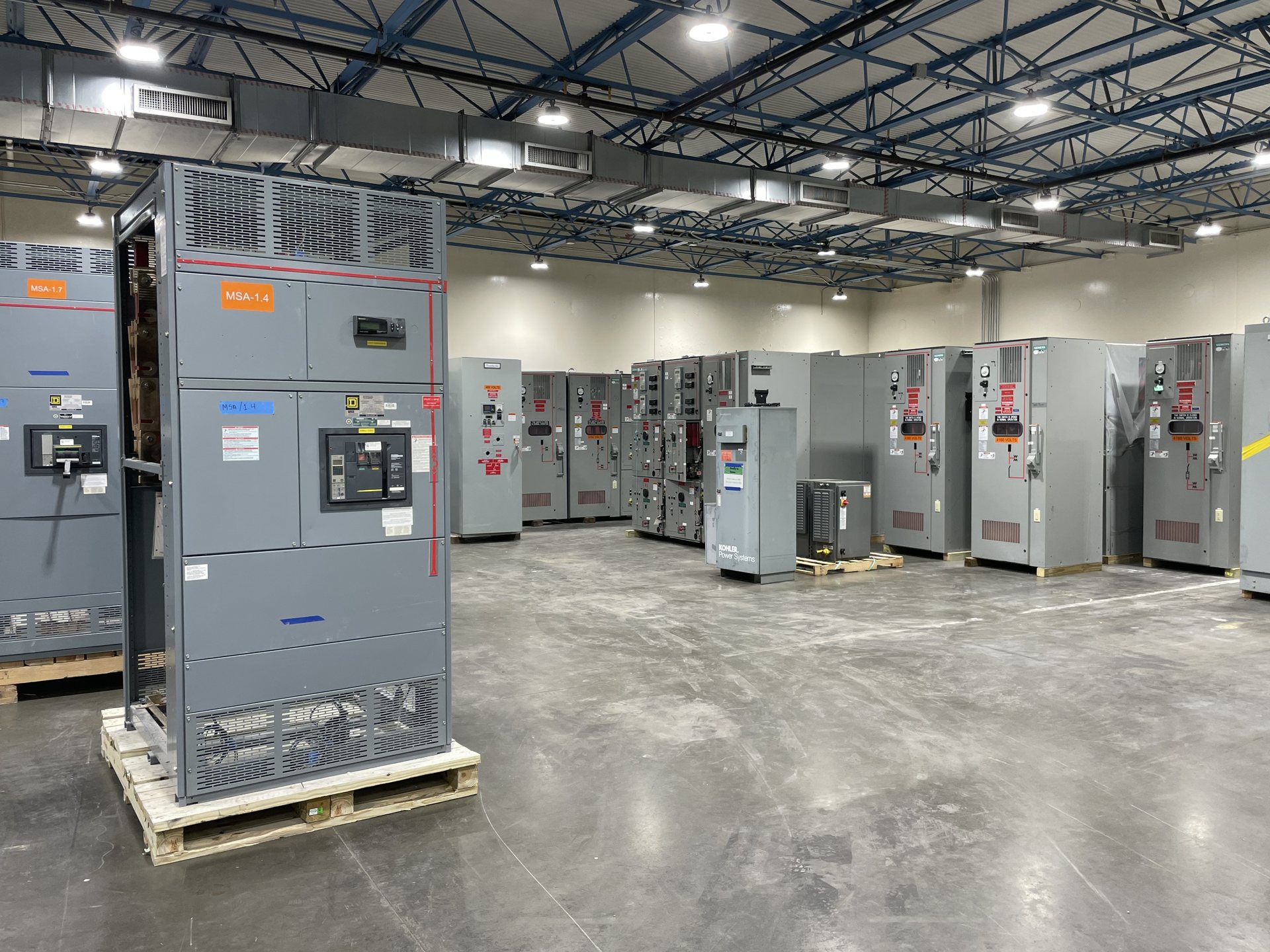
All voltage classes are considered, including switchgear from decommissioned data centers and shut-down power plants. On an agreed purchase, qualified buyer personnel perform the needed disconnects, removal, crane and rigging work, loading and hauling. We cover freight; the seller does not test the equipment or perform the physical work.
If the status of an assembly is uncertain, do not assume it is safe to approach or operate. A record or safely accessible exterior photo may be shared without opening it. For an agreed purchase, qualified buyer personnel coordinate the necessary disconnects and removal with the site.
Coordinating the handover
Where a lot spans several rooms or buildings, a general description of the locations helps the buyer understand the work. It is not necessary to gather the assets into one area. The buyer’s qualified personnel handle required disconnects, removal, rigging and loading, along with the freight and hauling.
The owner or an authorized contact can explain how access approval works and identify any deadline already known. That communication does not transfer the labor to the seller. A purchase and collection schedule are agreed after review, rather than assumed from the first message.
Cash offer and payment
After reviewing the equipment and the practical details, the buyer may make a cash offer. Whether the transaction proceeds depends on the review and agreement with the authorized seller. An agreed purchase is paid upfront, with the buyer covering freight and handling collection.
A seller can start with a short message about the assets and the site. Existing identification and condition notes are welcome when available, while gaps can be left open. The buyer considers the information and handles the removal and freight after the parties agree and the seller is paid upfront.