THE DETAILS EQUIPMENT
Sell busway in Michigan. Review warehouse clearance considerations, documentation, cash offers and freight coordination.
Understanding the asset
An owner considering selling busway in Michigan can start with a description of the actual assets and the proposed release. The equipment may be installed, in storage or part of a mixed lot. The buyer reviews what is offered rather than assuming that similarly named items are alike.
Busway is a power-distribution assembly using conductors enclosed in a protective housing. A surplus lot can include straight lengths, fittings, supports or other associated pieces, but the contents vary. The useful starting point is a description of the actual pieces, not an assumption that the lot forms a complete run.
The situation behind the sale
Warehouse inventory may be boxed, loose, stored in more than one area or missing some paperwork. Describe the group using existing records where possible, and say when a count is approximate. There is no need for the seller to unpack, move or test the items to begin a discussion.
A mixed inventory does not need to be sorted physically before it can be discussed. An existing list or a general description can distinguish assemblies from loose parts and identify items that are not for sale. The buyer handles the agreed collection instead of asking the owner to stage the inventory.
Details that identify the lot
Existing inventory notes may show lengths, manufacturer, visible ratings and whether fittings or tap-off units are included. If pieces are stored apart, describe the separate groups and any packaging already present. Length and shape can influence handling, so approximate dimensions from existing records are helpful when available.
Inventory information can be approximate at the first conversation. For example, an owner may know the number of lineups but not every component inside them. Describe the scope honestly and share existing exterior photographs when safe to do so. The buyer reviews unknowns rather than requiring seller testing.
Condition and purchase review
Unknown history is not the same as a claim that equipment has failed. Equally, a clean exterior or a complete-looking lineup is not proof that it works. A seller can describe the facts available, note missing components and let the buyer review the equipment without seller-conducted tests.
A proposed cash offer reflects a review of the assets and transaction details rather than a fixed price based on a label. The contents, available records, known condition, release schedule and site access can matter. The buyer may accept or decline an opportunity; any agreement is made with the authorized seller.
What the buyer handles
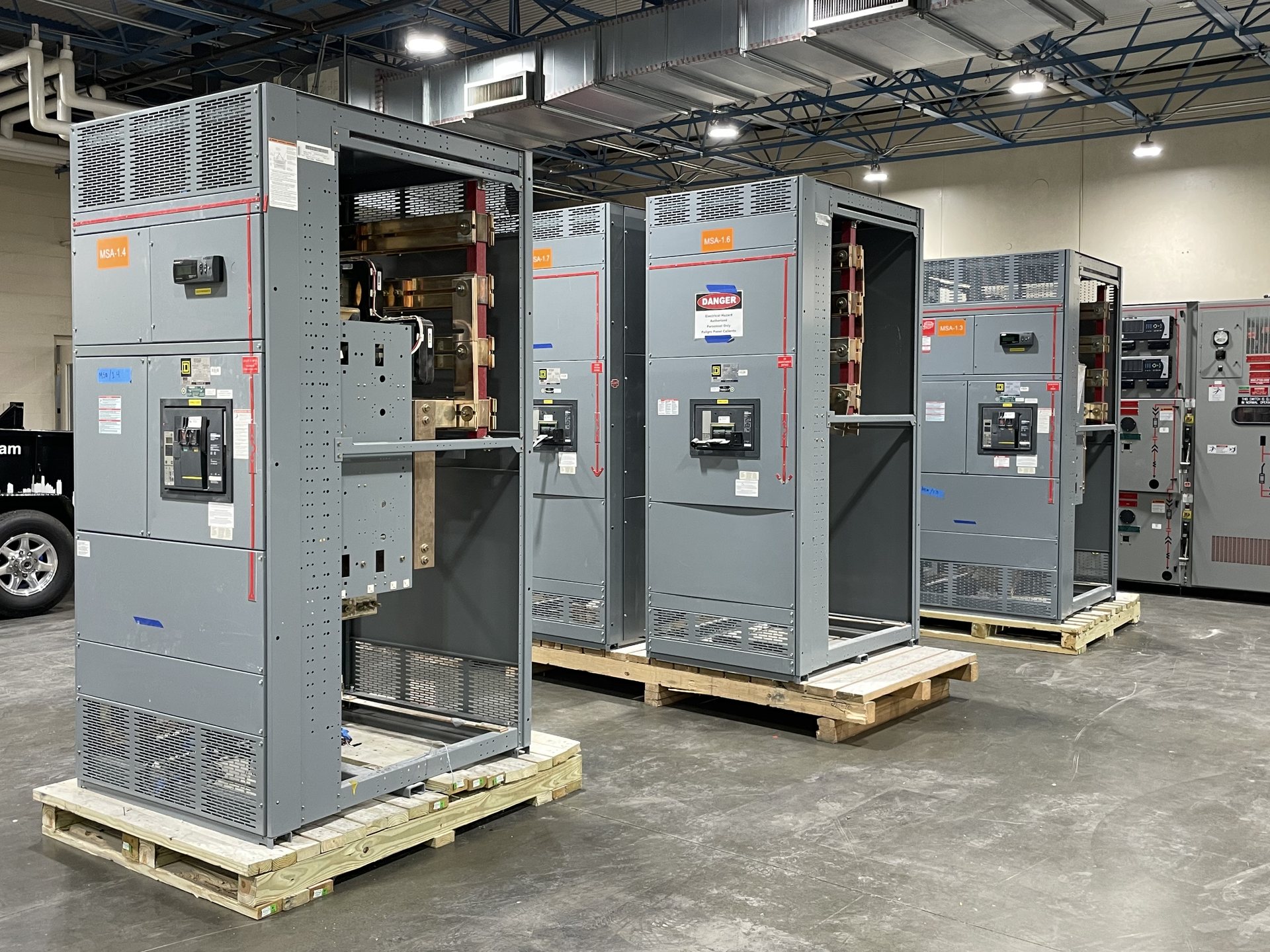
Our review can cover all voltage classes; our buying scope includes switchgear from decommissioned data centers and shut-down power plants. For a purchase both parties agree to, qualified buyer personnel handle necessary disconnects, removal, crane and rigging work, loading and hauling. Freight is covered, with no testing or physical work by the seller.
No seller testing is needed, and an inquiry is not a request to make equipment safe by yourself. Do not open equipment or go near an unsafe installation to obtain a label. The buyer uses qualified personnel for the necessary electrical and physical work, coordinated with the appropriate site contact.
Planning access and freight
For a collection plan, the buyer considers the equipment’s location, size and any known site restrictions. If several rooms or release dates are involved, those can be discussed as part of the proposed purchase. The buyer’s qualified personnel perform the on-site work and arrange the covered freight.
Different pieces may be available at different times. A known sequence or release window can be discussed before the purchase is agreed, even if some details remain unsettled. Qualified buyer personnel handle the actual physical work; the seller is not asked to stage or ship the equipment.
From inquiry to payment
After reviewing the equipment and the practical details, the buyer may make a cash offer. Whether the transaction proceeds depends on the review and agreement with the authorized seller. An agreed purchase is paid upfront, with the buyer covering freight and handling collection.
An existing equipment list or a brief description is a useful start. Include the general location and an authorized contact, along with any known release window. Information can remain incomplete; the buyer reviews the opportunity without asking the seller to test, disconnect, package or load the assets.