THE DETAILS EQUIPMENT
Sell busway in Michigan. Review industrial closure considerations, documentation, cash offers and freight coordination.
Understanding the asset
An owner considering selling busway in Michigan can start with a description of the actual assets and the proposed release. The equipment may be installed, in storage or part of a mixed lot. The buyer reviews what is offered rather than assuming that similarly named items are alike.
Busway is a power-distribution assembly using conductors enclosed in a protective housing. A surplus lot can include straight lengths, fittings, supports or other associated pieces, but the contents vary. The useful starting point is a description of the actual pieces, not an assumption that the lot forms a complete run.
The situation behind the sale
In a closure, ownership, release dates and the boundary of the sale deserve attention alongside the equipment list. Existing project documents may distinguish assets staying with a property from those available for purchase. The buyer coordinates professional removal for the agreed items after the parties agree on terms.
An equipment name tells only part of the story: a sale might involve one assembly, several sections or related loose parts. The owner can describe the intended boundary in ordinary language. The buyer reviews the actual proposed lot and handles the physical work if a purchase is agreed.
Details that identify the lot
Existing inventory notes may show lengths, manufacturer, visible ratings and whether fittings or tap-off units are included. If pieces are stored apart, describe the separate groups and any packaging already present. Length and shape can influence handling, so approximate dimensions from existing records are helpful when available.
Start with information the owner already has: an asset description, approximate quantity, location and any available identifying marks. Older records may be incomplete, so identify uncertainties instead of filling them with assumptions. The buyer can ask follow-up questions while reviewing the proposed purchase; the seller does not have to undertake technical work.
Condition and purchase review
The buyer can review equipment without a seller’s certificate of operation. Useful context may include known damage, whether the item was used or stored, and any missing parts. Do not guess at details that are unavailable: an accurate statement that condition is unknown is more useful than an unsupported assurance.
The buyer considers the equipment itself and the practical work needed to collect it. Quantity, identifying information, completeness, condition, access and timing can all affect the review. An inquiry does not guarantee an offer for every item or a particular amount, and the seller can decide whether to accept a proposed purchase.
What the buyer handles
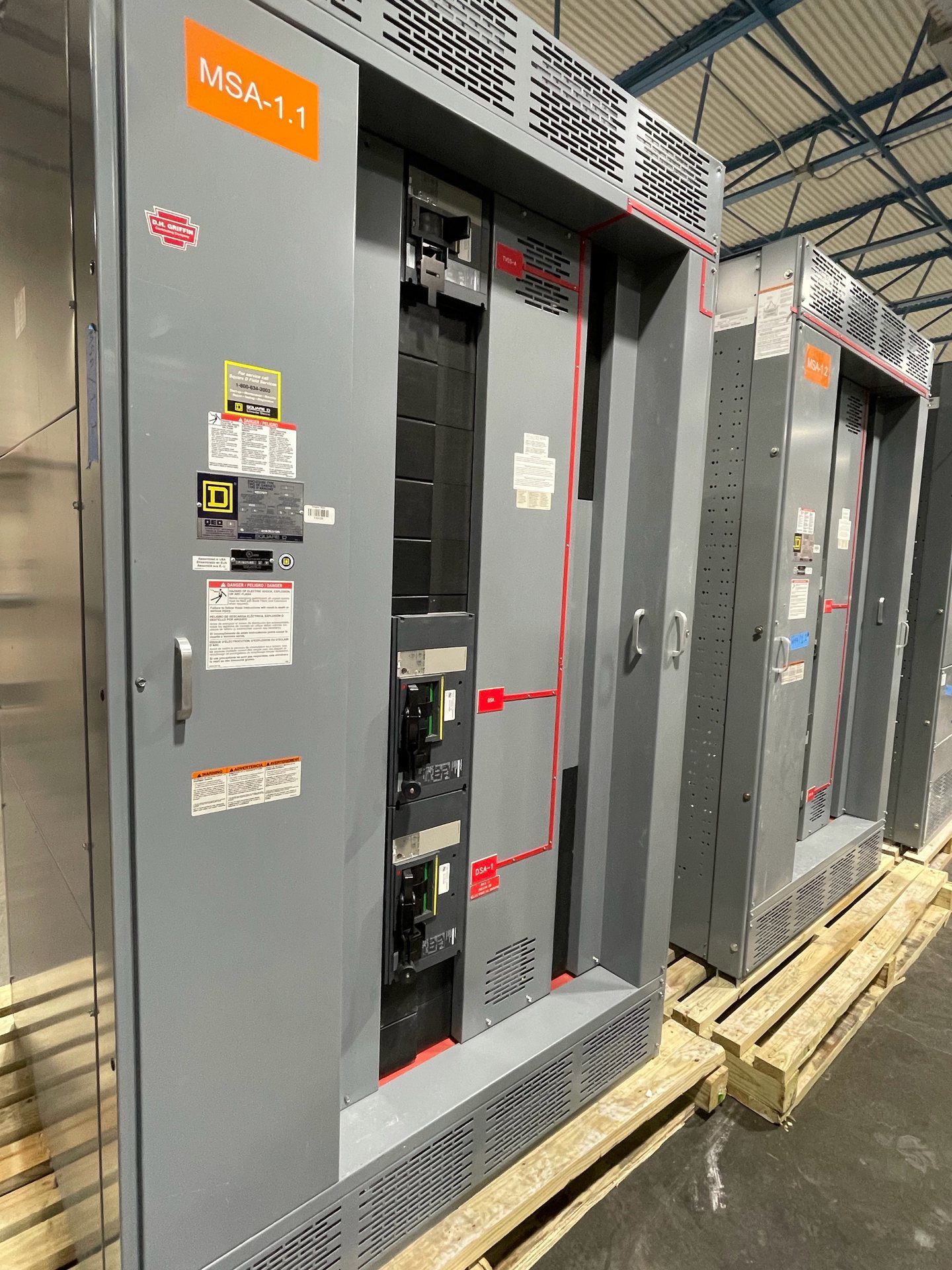
We buy equipment across all voltage classes, including switchgear from decommissioned data centers and shut-down power plants. With an agreed purchase, the buyer’s qualified personnel handle required disconnects, removal, cranes, rigging, loading and hauling, and the buyer covers freight. The seller does not have to test or physically handle the equipment.
Leave electrical operations and removal to qualified personnel working for the buyer. The owner does not need to energize, test, disconnect or open equipment for an offer. If an identifying detail cannot be obtained safely, it can be reported as unknown rather than investigated.
Planning access and freight
A freight plan considers more than a destination. The buyer may need to coordinate access to the equipment, lifting and a route out of the site. Existing dimensions or site rules are helpful when available. The buyer handles the on-site physical work, loading, hauling and covered freight.
The owner may have a deadline for clearing a space or completing a property handover. The buyer can consider that information during review, along with any access rules. Timing is agreed rather than presumed, and the buyer handles collection and covered freight for the purchased assets.
From inquiry to payment
Send an inquiry with whatever description is readily available. After review, the buyer may make a cash offer for the proposed assets. If the purchase is agreed, payment is upfront, while the buyer handles necessary work and covers freight. A review does not commit either party to a sale.
Tell the buyer what equipment may be available and share any existing records that help define the lot. If the details or condition are uncertain, say so rather than investigating unsafe equipment. The seller does not test or handle removal; after the purchase is agreed, payment is upfront.