THE DETAILS EQUIPMENT
Sell busway in Michigan. Review retired electrical equipment considerations, documentation, cash offers and freight coordination.
Understanding the asset
An owner considering selling busway in Michigan can start with a description of the actual assets and the proposed release. The equipment may be installed, in storage or part of a mixed lot. The buyer reviews what is offered rather than assuming that similarly named items are alike.
Busway is a power-distribution assembly using conductors enclosed in a protective housing. A surplus lot can include straight lengths, fittings, supports or other associated pieces, but the contents vary. The useful starting point is a description of the actual pieces, not an assumption that the lot forms a complete run.
The situation behind the sale
Retired means that an asset is no longer intended for its former role; it does not establish that it works or that every part is present. Explain what is known about its history and whether it remains installed. Unknown condition can be disclosed without arranging tests or making technical claims.
Existing project records may show items that must stay on site alongside items that can be sold. If so, distinguish the proposed sale from retained property and note where ownership is uncertain. The buyer can review the authorized assets without treating a broad project description as a complete inventory.
Details that identify the lot
Existing inventory notes may show lengths, manufacturer, visible ratings and whether fittings or tap-off units are included. If pieces are stored apart, describe the separate groups and any packaging already present. Length and shape can influence handling, so approximate dimensions from existing records are helpful when available.
Records gathered for ordinary asset management may be enough for an initial review. A description of the type, count and location, plus any known model or rating, helps define the lot. A missing document or unreadable marking can be identified as such without opening or operating equipment.
Condition and purchase review
Condition affects an offer, but a seller does not need to establish that a device operates. Describe known damage, missing pieces, storage history or prior use if those facts are available, and say when the operating condition is unknown. A retired or unused label is a description, not a substitute for a condition assessment.
There is no reliable way to assign a universal price from equipment type, age or rating alone. The buyer reviews the described items along with the work and access needed for collection. An offer is subject to that review and to agreement on the purchase; the seller is not committed merely by asking.
What the buyer handles
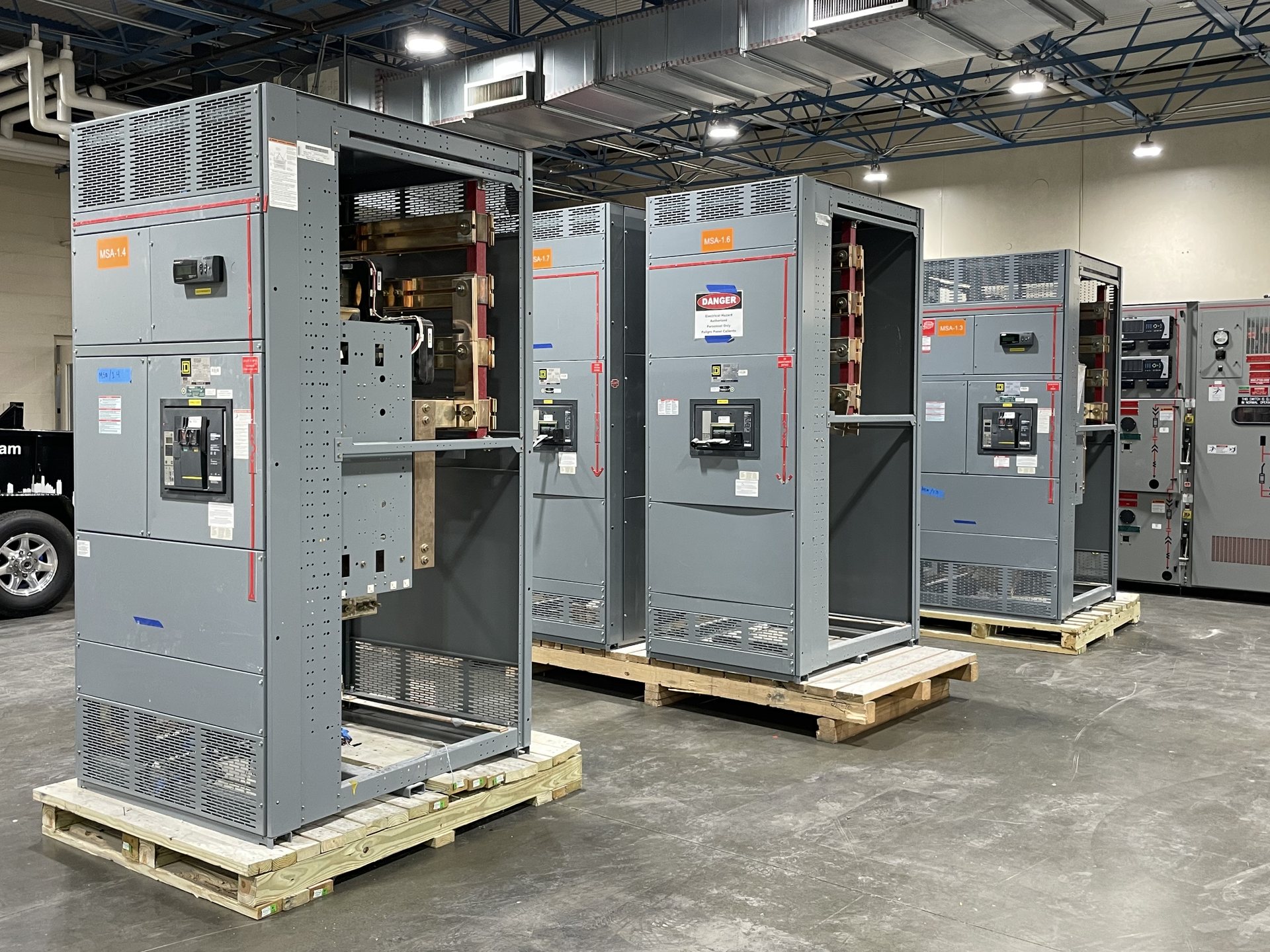
We buy equipment across all voltage classes, including switchgear from decommissioned data centers and shut-down power plants. With an agreed purchase, the buyer’s qualified personnel handle required disconnects, removal, cranes, rigging, loading and hauling, and the buyer covers freight. The seller does not have to test or physically handle the equipment.
A seller does not have to prepare equipment electrically or demonstrate that it works. Avoid operating devices, opening covers or entering unsafe areas for photographs. The buyer’s qualified personnel handle the necessary disconnects and removal, coordinating access and the work with the authorized site representative.
Planning access and freight
For a collection plan, the buyer considers the equipment’s location, size and any known site restrictions. If several rooms or release dates are involved, those can be discussed as part of the proposed purchase. The buyer’s qualified personnel perform the on-site work and arrange the covered freight.
If another party controls a building or a portion of the site, identify the appropriate contact when known. The buyer can discuss the access process and coordinate its removal work. The owner does not have to load a truck, supply a crane or book freight.
From inquiry to payment
An initial description lets the buyer review the equipment and any known access or timing considerations. A cash offer may be made after that review; the parties decide whether to agree to a purchase. For an agreed transaction, payment is upfront, and the buyer covers freight.
To start, describe the assets you want considered and provide an authorized contact. Existing identification, condition notes and timing are useful when available, but uncertain details can be labeled unknown. The buyer reviews the opportunity, pays upfront for an agreed purchase and takes care of the physical work.