THE DETAILS EQUIPMENT
Sell motor control center (MCC) in Michigan. Review surplus equipment considerations, documentation, cash offers and freight coordination.
Understanding the asset
An owner considering selling motor control centers (MCCs) in Michigan can start with a description of the actual assets and the proposed release. The equipment may be installed, in storage or part of a mixed lot. The buyer reviews what is offered rather than assuming that similarly named items are alike.
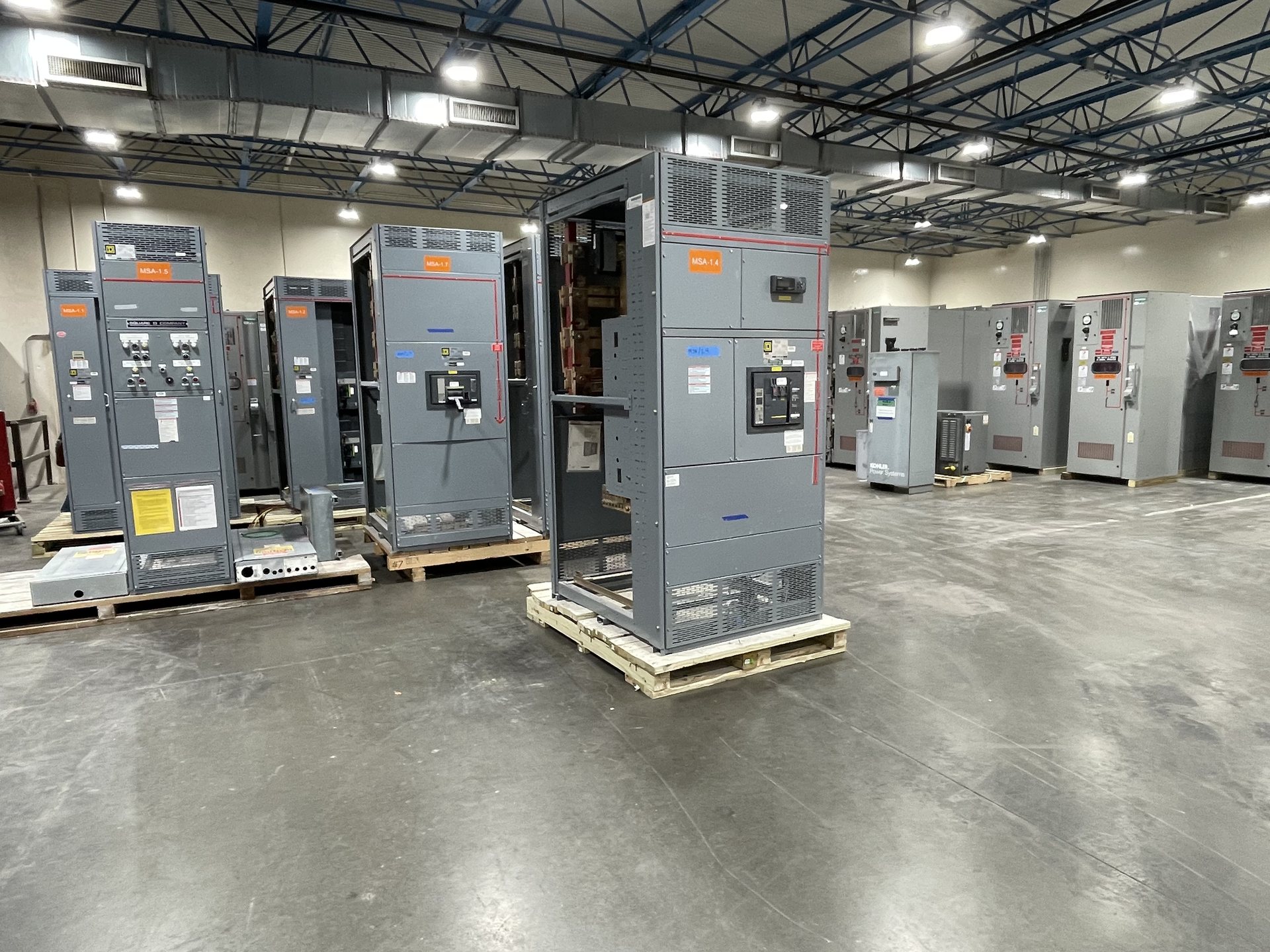
A motor control center, or MCC, groups equipment associated with controlling motors and related loads. It may consist of multiple vertical sections with individual units. For a sale, distinguish a complete lineup from detached units or spare components, because the count and arrangement help explain the actual inventory.
The situation behind the sale
A surplus description should separate an entire assembly from spare parts or individual sections. If it is unclear whether a component belongs with the lineup, mark that uncertainty. The buyer can evaluate the actual proposed lot instead of treating a broad equipment name as proof that everything is complete.
A release date and a site closure date are not necessarily the same. Some assets might remain in place longer than others or require an agreed access window. If the schedule is known, the buyer can take it into account while reviewing the equipment; the owner does not have to move it first.
Details that identify the lot
If they are already available, share the lineup identification, section count and information about the installed units. Note separately any loose buckets or spare units and whether they are included. A buyer can review incomplete records; a seller does not need to operate the equipment or remove components to prepare a description.
Inventory information can be approximate at the first conversation. For example, an owner may know the number of lineups but not every component inside them. Describe the scope honestly and share existing exterior photographs when safe to do so. The buyer reviews unknowns rather than requiring seller testing.
Condition and purchase review
Be direct about the state of the lot as it is known. An assembly may be used, unused, incomplete, stored or still installed; none of those labels alone proves its present operating condition. Known damage and missing information can be disclosed without arranging a test or making claims beyond the records.
A stored spare and an installed lineup may require different handling even when they serve related purposes. The buyer takes the equipment and collection circumstances into account when deciding whether to make an offer. Any amount and transaction terms are agreed with the authorized seller, not inferred from a general description.
What the buyer handles
The buyer considers equipment of all voltage classes, including switchgear at decommissioned data centers and shut-down power plants. Once a purchase is agreed, the buyer’s qualified personnel handle the required disconnects, removal, crane and rigging work, loading and hauling. Freight is covered by the buyer; the seller does no testing or physical work.
There is no reason for an owner to operate equipment or expose its interior to request an offer. Use only existing records and information that can be obtained safely. The buyer’s qualified personnel handle the necessary electrical disconnects and physical removal in coordination with the authorized site representative.
Planning access and freight
Access and timing are practical parts of a review, whether equipment sits in a warehouse or remains installed at a facility. Existing information about location and release windows is useful; exact measurements are not a prerequisite for an initial inquiry. The buyer coordinates the lifting, loading, hauling and freight.
If site rules or another contractor’s schedule affect access, mention them during the discussion. The buyer coordinates its qualified personnel with the authorized site representative and handles the removal work. The seller is not required to hire a crew, package equipment or book a carrier.
From inquiry to payment
Send an inquiry with whatever description is readily available. After review, the buyer may make a cash offer for the proposed assets. If the purchase is agreed, payment is upfront, while the buyer handles necessary work and covers freight. A review does not commit either party to a sale.
A seller can start with a short message about the assets and the site. Existing identification and condition notes are welcome when available, while gaps can be left open. The buyer considers the information and handles the removal and freight after the parties agree and the seller is paid upfront.