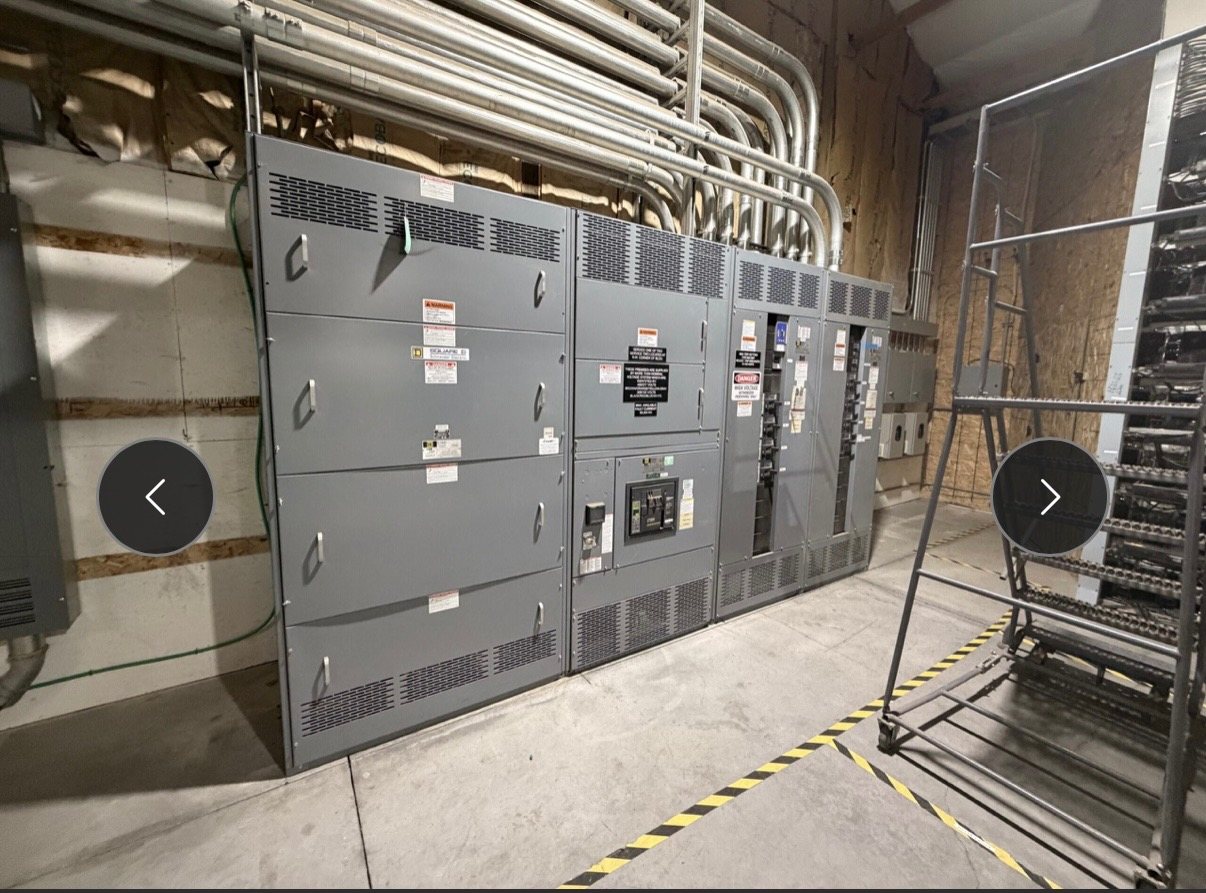
THE DETAILS VOLTAGE & AMP RATINGS
Explore selling surplus electrical equipment marked 277/480-volt in Michigan, with clear identification and offer planning.
What the marking tells you
A Michigan owner can inquire about 277/480-volt electrical distribution equipment whether it is still in place or already in storage. The rating provides one useful clue, but it is only part of the description. The buyer reviews the actual equipment, available information and collection requirements before deciding whether to make an offer.
A 277/480-volt marking is a voltage description. On a suitably marked three-phase, four-wire system it commonly refers to 277 volts line-to-neutral and 480 volts line-to-line. A sale description should preserve the actual marking rather than infer phase, current rating, interrupting rating or compatibility from those two numbers alone.
Details beyond one rating
An existing nameplate or asset record may show additional voltage, current and other markings. Keep the information attached to the particular assembly or device it describes; a neighboring component may carry different ratings. A missing label can be noted as unknown, and no seller measurements or testing are required.
Inventory information can be approximate at the first conversation. For example, an owner may know the number of lineups but not every component inside them. Describe the scope honestly and share existing exterior photographs when safe to do so. The buyer reviews unknowns rather than requiring seller testing.
The proposed sale
The rating does not determine when an asset becomes available or how it can be moved. Existing project records may identify the release date, ownership and access restrictions for each assembly. The buyer coordinates necessary disconnects and removal through qualified personnel after the parties agree on the purchase.
When several groups are involved in a project, a clear contact for the proposed sale can make the handover easier to discuss. The buyer coordinates its own qualified personnel and physical work with the authorized site representative. The seller is not responsible for disconnecting or transporting the equipment.
Condition and offer review
Condition affects an offer, but a seller does not need to establish that a device operates. Describe known damage, missing pieces, storage history or prior use if those facts are available, and say when the operating condition is unknown. A retired or unused label is a description, not a substitute for a condition assessment.
The proposed lot and its release conditions form the basis of the buyer’s review. Available records, known condition and practical site access help explain that opportunity. A cash offer may be made after review, but the buyer does not promise that every asset has value or will be purchased.
Qualified work and safety
We buy equipment across all voltage classes, including switchgear from decommissioned data centers and shut-down power plants. With an agreed purchase, the buyer’s qualified personnel handle required disconnects, removal, cranes, rigging, loading and hauling, and the buyer covers freight. The seller does not have to test or physically handle the equipment.
Leave electrical operations and removal to qualified personnel working for the buyer. The owner does not need to energize, test, disconnect or open equipment for an offer. If an identifying detail cannot be obtained safely, it can be reported as unknown rather than investigated.
Access and freight
If known, the equipment location, access windows, approximate size and building restrictions can help the buyer plan the work. Large or awkward pieces may need special lifting or a coordinated route. The buyer arranges qualified crews and equipment, including cranes and rigging where needed, and handles loading and hauling.
A practical handover identifies the assets, the authorized site contact and any restrictions on entry or work. The buyer coordinates its own crews and handles the work necessary to collect the agreed purchase. The seller need not package, load or arrange a shipment.
Request an offer
Send an inquiry with whatever description is readily available. After review, the buyer may make a cash offer for the proposed assets. If the purchase is agreed, payment is upfront, while the buyer handles necessary work and covers freight. A review does not commit either party to a sale.
When you are ready, share what is available and any records you already have. If a rating or condition is uncertain, simply say so. The buyer reviews the opportunity and, if a purchase is agreed, pays upfront and handles the qualified removal work and freight.