THE DETAILS INDUSTRIES
Explore selling surplus electrical distribution equipment from utility substation changeouts projects in Michigan, including offer and freight planning.
The project and the assets
Owners can request a purchase review for surplus utility substation changeout electrical equipment in Michigan, including assets still in place. The equipment offered, its ownership and the release schedule matter more than a project label alone. The examples below illustrate how an equipment sale might fit into a larger project.
In a hypothetical utility substation changeout, ownership and authority to sell are essential: not every asset on a site necessarily belongs to the same party. The proposed inventory should identify only equipment the seller is authorized to release. Existing asset records can help distinguish individual items and their status.
Planning the release
For a mixed lot, explain whether equipment in different rooms or project phases is intended to be sold together. A count or existing inventory helps define the proposed boundary. The buyer can discuss the group and any separate assets, subject to review; an offer for every item is not automatic.
A mixed inventory does not need to be sorted physically before it can be discussed. An existing list or a general description can distinguish assemblies from loose parts and identify items that are not for sale. The buyer handles the agreed collection instead of asking the owner to stage the inventory.
Condition and offer review
An owner’s records might establish that an asset was removed from service, but that is different from establishing its current condition. State the known facts, including any incomplete parts or damage, and leave the rest uncertain. The buyer makes its own purchase review without requiring the seller to test the asset.
A stored spare and an installed lineup may require different handling even when they serve related purposes. The buyer takes the equipment and collection circumstances into account when deciding whether to make an offer. Any amount and transaction terms are agreed with the authorized seller, not inferred from a general description.
Site and inventory considerations
Controlled access and an operating electrical environment call for coordination with the owner and applicable site procedures. Necessary disconnects and removal are handled by the buyer’s qualified personnel in coordination with the authorized site representatives. An inquiry does not authorize work or imply that operating equipment can be approached.
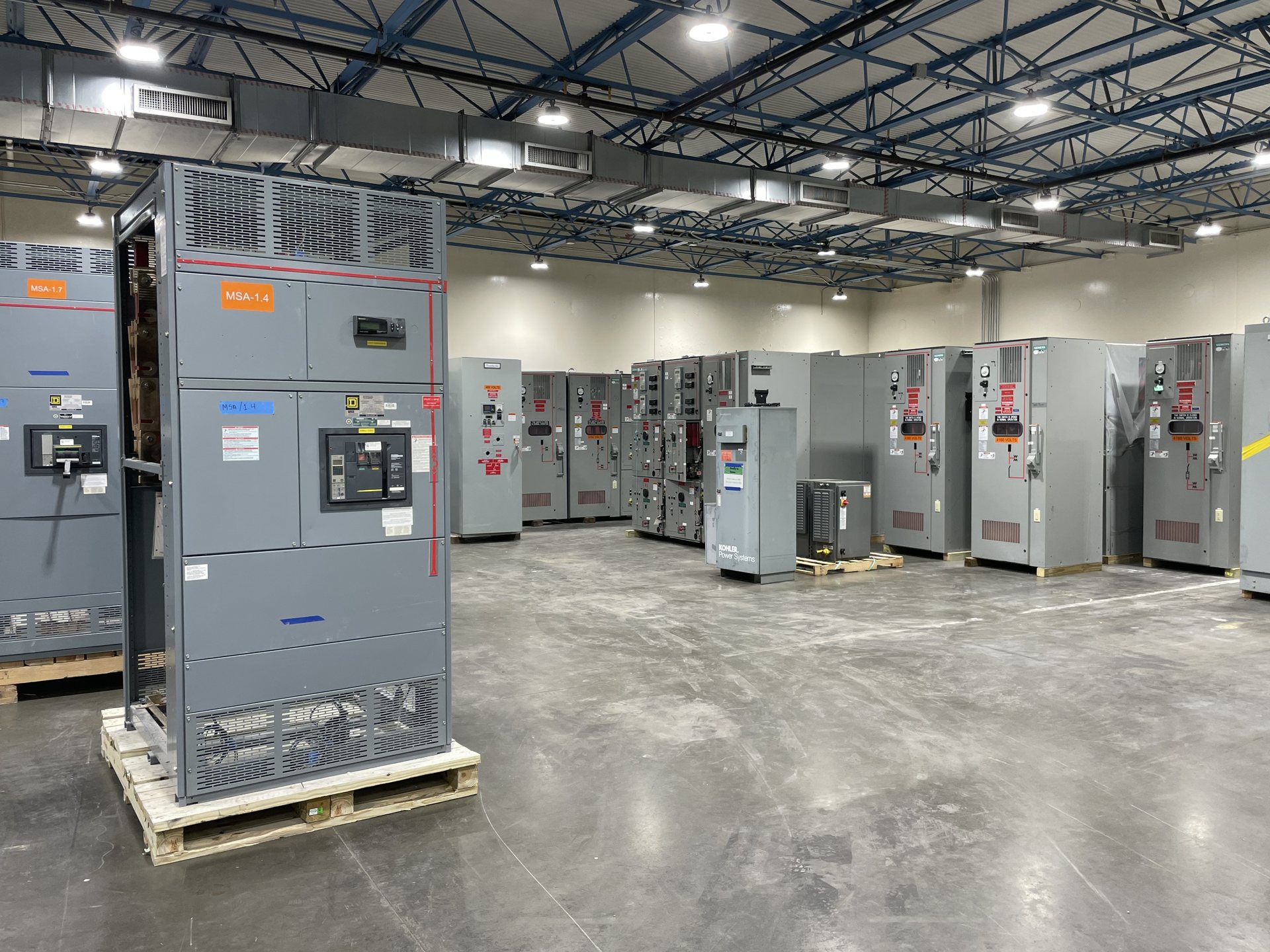
Records do not need to be perfect to start an inquiry. An existing equipment list, a broad description and any safely accessible exterior photos can establish the scope. Note whether the offer concerns a complete assembly, a partial lineup or individual pieces, and avoid attributing an unverified rating to the whole group.
Buyer-handled removal
All voltage classes are considered, including switchgear from decommissioned data centers and shut-down power plants. On an agreed purchase, qualified buyer personnel perform the needed disconnects, removal, crane and rigging work, loading and hauling. We cover freight; the seller does not test the equipment or perform the physical work.
If the status of an assembly is uncertain, do not assume it is safe to approach or operate. A record or safely accessible exterior photo may be shared without opening it. For an agreed purchase, qualified buyer personnel coordinate the necessary disconnects and removal with the site.
Site access and freight
Collection can require planning around site access, doorways, work areas or the timing of a property handover. Share any existing information about those constraints so the buyer can review them with the assets. The buyer handles the physical logistics, including qualified labor, loading and transport; the seller need not stage the equipment.
If site rules or another contractor’s schedule affect access, mention them during the discussion. The buyer coordinates its qualified personnel with the authorized site representative and handles the removal work. The seller is not required to hire a crew, package equipment or book a carrier.
Inquiry, offer and payment
After reviewing the equipment and the practical details, the buyer may make a cash offer. Whether the transaction proceeds depends on the review and agreement with the authorized seller. An agreed purchase is paid upfront, with the buyer covering freight and handling collection.
A first conversation can begin with the equipment type, location and the owner’s intended release. Safely accessible existing photos or records can help but are not a demand to enter an unsafe area. The buyer handles the agreed work, and the seller does not perform testing or physical removal.