THE DETAILS INDUSTRIES
Explore selling surplus electrical distribution equipment from utility substation changeouts projects in Michigan, including offer and freight planning.
The project and the assets
Owners can request a purchase review for surplus utility substation changeout electrical equipment in Michigan, including assets still in place. The equipment offered, its ownership and the release schedule matter more than a project label alone. The examples below illustrate how an equipment sale might fit into a larger project.
In a hypothetical utility substation changeout, ownership and authority to sell are essential: not every asset on a site necessarily belongs to the same party. The proposed inventory should identify only equipment the seller is authorized to release. Existing asset records can help distinguish individual items and their status.
Planning the release
For planning, identify the person authorized to discuss the assets and any known release window. Existing information is sufficient for an initial inquiry; a complete technical package is not a prerequisite. The buyer reviews the equipment and the practical work needed before deciding whether to make an offer.
The boundary of the proposed sale is worth settling early. An owner may want to keep some devices, records or accessories while offering the main assembly. Sharing that distinction helps the buyer review the right assets and avoids assuming that everything in the same room belongs to the lot.
Condition and offer review
The buyer can review equipment without a seller’s certificate of operation. Useful context may include known damage, whether the item was used or stored, and any missing parts. Do not guess at details that are unavailable: an accurate statement that condition is unknown is more useful than an unsupported assurance.
Two lots with the same equipment type can present different purchase considerations because their contents and site conditions differ. The buyer reviews known condition, documentation, quantity and the practical removal requirements. An offer is subject to that review, and the owner chooses whether to accept the terms proposed.
Site and inventory considerations
Controlled access and an operating electrical environment call for coordination with the owner and applicable site procedures. Necessary disconnects and removal are handled by the buyer’s qualified personnel in coordination with the authorized site representatives. An inquiry does not authorize work or imply that operating equipment can be approached.
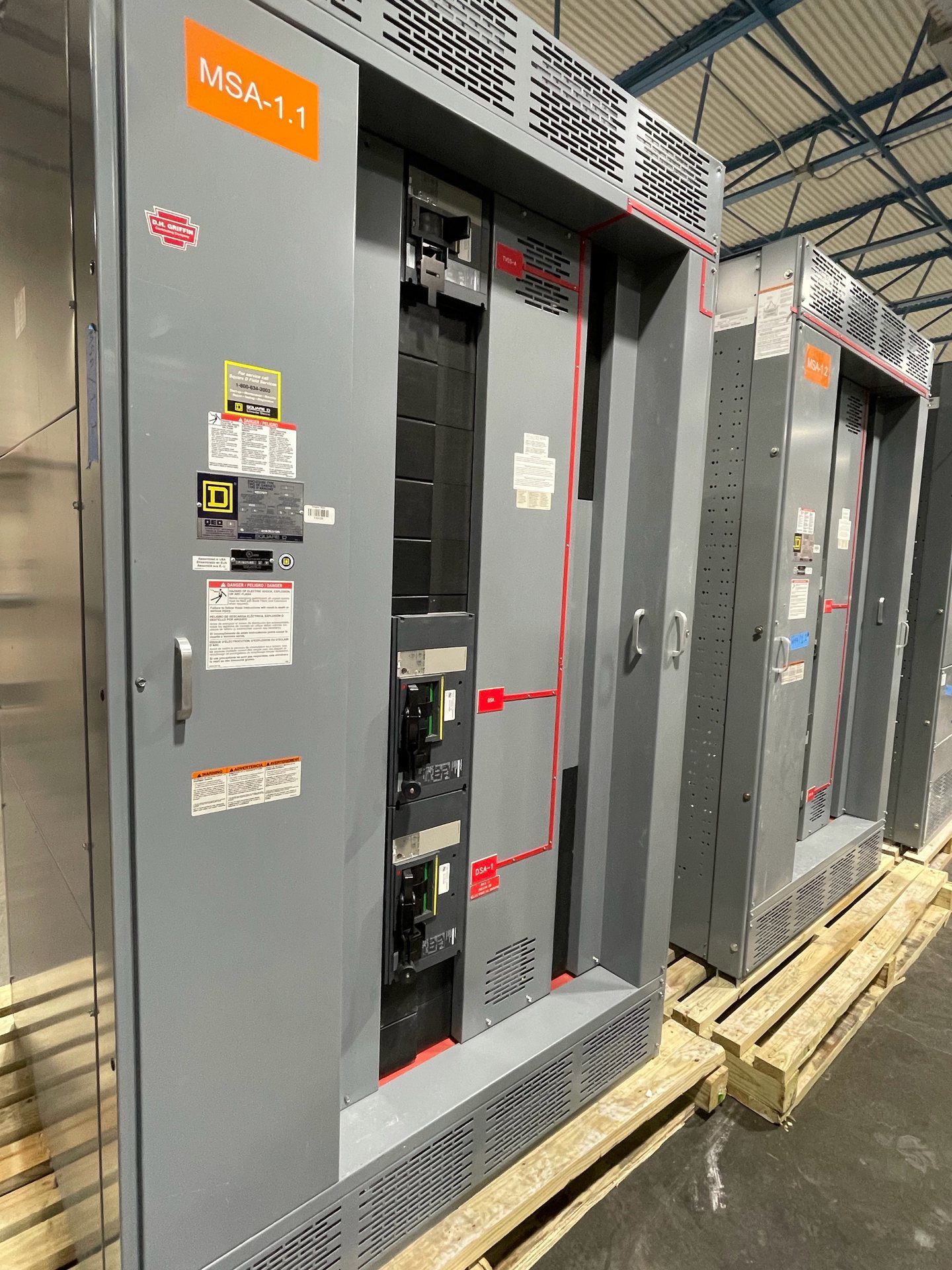
A helpful description can be simple: the type and count of equipment, where it is located, and any manufacturer or rating information already on hand. If there are loose parts, identify them separately where possible. There is no need to create a technical report or guess at missing information before contacting the buyer.
Buyer-handled removal
We buy equipment of all voltage classes and buy switchgear from decommissioned data centers and shut-down power plants. On an agreed purchase, the buyer takes care of necessary disconnects, removal, cranes, rigging, loading, hauling and freight through qualified personnel. The seller is not expected to test, move, load or ship anything.
The seller is not asked to prove the equipment works or prepare it for removal. Do not open an enclosure, touch electrical parts or enter an unsafe area to identify it. The buyer uses qualified personnel to coordinate and perform the necessary electrical work and physical removal.
Site access and freight
For a large or awkward assembly, collection planning may involve lifting equipment and space to maneuver. A seller can mention known access restrictions without finding a carrier or arranging a crane. The buyer handles required rigging, loading and hauling with qualified personnel and covers freight.
The owner or an authorized contact can explain how access approval works and identify any deadline already known. That communication does not transfer the labor to the seller. A purchase and collection schedule are agreed after review, rather than assumed from the first message.
Inquiry, offer and payment
An initial description lets the buyer review the equipment and any known access or timing considerations. A cash offer may be made after that review; the parties decide whether to agree to a purchase. For an agreed transaction, payment is upfront, and the buyer covers freight.
An existing equipment list or a brief description is a useful start. Include the general location and an authorized contact, along with any known release window. Information can remain incomplete; the buyer reviews the opportunity without asking the seller to test, disconnect, package or load the assets.