THE DETAILS INDUSTRIES
Explore selling surplus electrical distribution equipment from hospital and campus projects in Michigan, including offer and freight planning.
The project and the assets
Owners can request a purchase review for surplus hospital or campus electrical equipment in Michigan, including assets still in place. The equipment offered, its ownership and the release schedule matter more than a project label alone. The examples below illustrate how an equipment sale might fit into a larger project.
A hypothetical hospital or campus upgrade can release distribution assets in phases while other equipment remains needed. An existing project list may show which assemblies are actually surplus and when they can be handed over. The buyer reviews those assets, not an assumed inventory for the entire property.
Planning the release
For a handover, describe known site access rules, contact arrangements and any release window. Existing dimensions and a general description of the equipment location can help the buyer plan. The buyer supplies qualified personnel and handles the on-site work, loading and freight for an agreed purchase.
An owner may prefer one transaction or may have assets released at separate times. Describe the intended group and any dates already established; the buyer can discuss the practical scope during review. No particular offer, schedule or purchase of every asset is assumed just because an inquiry has been made.
Condition and offer review
An owner’s records might establish that an asset was removed from service, but that is different from establishing its current condition. State the known facts, including any incomplete parts or damage, and leave the rest uncertain. The buyer makes its own purchase review without requiring the seller to test the asset.
There is no reliable way to assign a universal price from equipment type, age or rating alone. The buyer reviews the described items along with the work and access needed for collection. An offer is subject to that review and to agreement on the purchase; the seller is not committed merely by asking.
Site and inventory considerations
Continuity constraints and access rules should be discussed with the authorized site representative. The buyer uses qualified personnel for the agreed disconnects and removal, coordinated with the site. A purchase inquiry does not promise uninterrupted power, a particular cutover result or collection on a date that has not been agreed.
The most useful inventory is one that describes the property being offered, not every item on a project. Available manufacturer markings, quantities and a broad location can help. When one figure refers to a component rather than the complete assembly, preserve that distinction and leave uncertain fields blank.
Buyer-handled removal
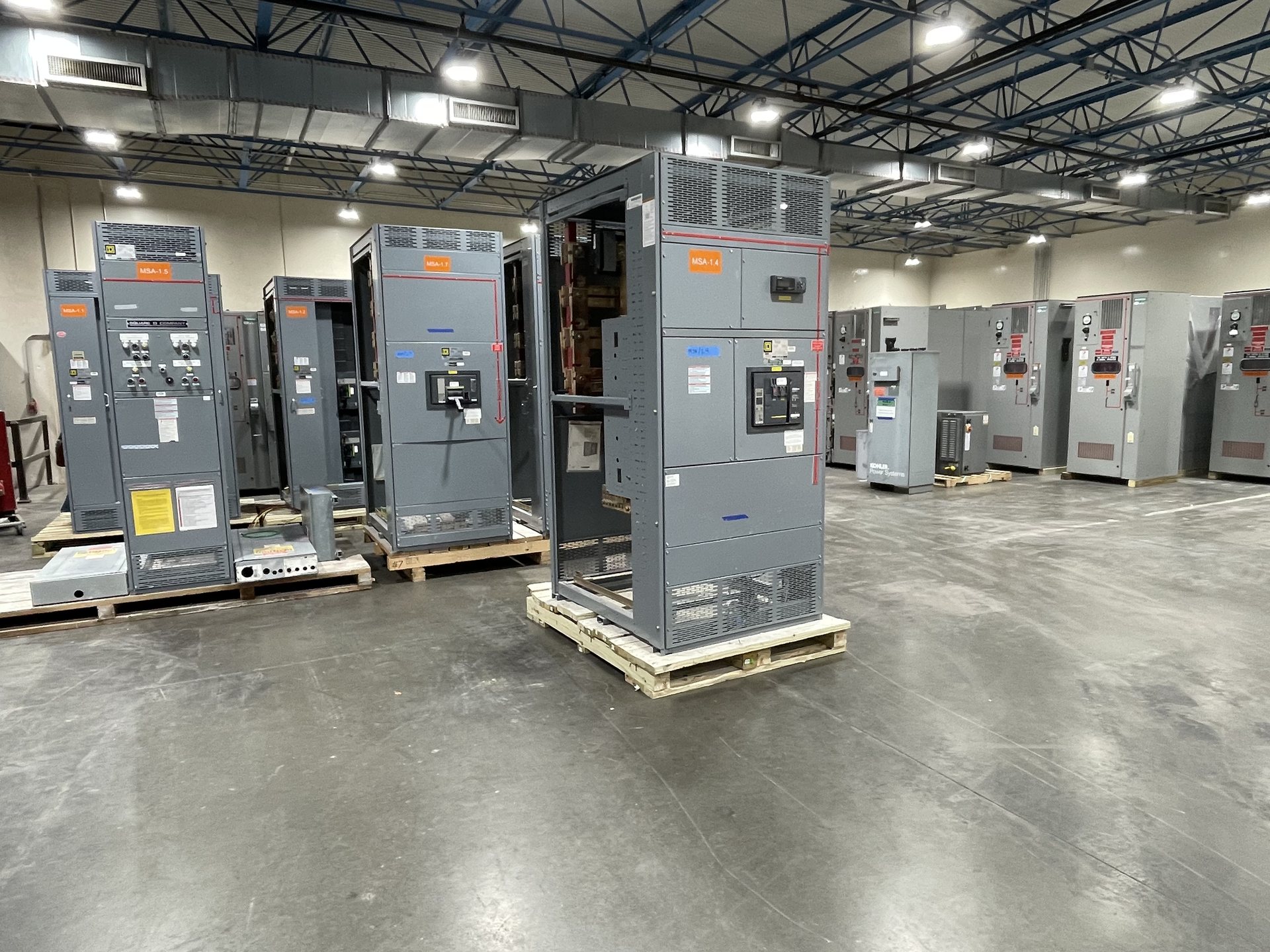
The buyer considers equipment of all voltage classes, including switchgear at decommissioned data centers and shut-down power plants. Once a purchase is agreed, the buyer’s qualified personnel handle the required disconnects, removal, crane and rigging work, loading and hauling. Freight is covered by the buyer; the seller does no testing or physical work.
A seller does not have to prepare equipment electrically or demonstrate that it works. Avoid operating devices, opening covers or entering unsafe areas for photographs. The buyer’s qualified personnel handle the necessary disconnects and removal, coordinating access and the work with the authorized site representative.
Site access and freight
Access and timing are practical parts of a review, whether equipment sits in a warehouse or remains installed at a facility. Existing information about location and release windows is useful; exact measurements are not a prerequisite for an initial inquiry. The buyer coordinates the lifting, loading, hauling and freight.
The owner or an authorized contact can explain how access approval works and identify any deadline already known. That communication does not transfer the labor to the seller. A purchase and collection schedule are agreed after review, rather than assumed from the first message.
Inquiry, offer and payment
The buyer first reviews what is offered and the associated site details. A cash offer may follow, subject to that review and agreement on the transaction; the seller can decide whether to accept. For an agreed purchase, the seller is paid upfront, and the buyer covers freight.
If you have an existing list or a few safely accessible exterior photos, those can accompany the inquiry; a short description also works. Include any known deadline and identify who can authorize the sale. The seller does no testing or physical work, and the buyer plans the agreed collection after upfront payment.